SaaS Development Services for Subscription-Based Software Products

Unisam Technologies develops SaaS products around users, tenant structures, subscription models, workflows and connected systems. We build SaaS MVPs, multi-tenant platforms, subscription-based products and API-connected SaaS applications based on the functional and technical requirements of each product.

SaaS product development illustration
SaaS Product Structure

SaaS Products Built Around Users, Tenants & Business Models

A SaaS product is more than a web application hosted online. Depending on the product model, it may need to manage multiple customer organizations, users, permissions, subscription plans, feature access, billing and administration within one software environment.

Unisam Technologies develops SaaS products around these requirements. The product structure can be planned for an initial SaaS MVP, a multi-tenant platform or an established subscription software product according to its users, tenant model, workflows, integrations and technical scope.

Common SaaS Foundation
Users, accounts & roles
Tenants & organizations
Plans, billing & feature access
APIs, integrations & administration
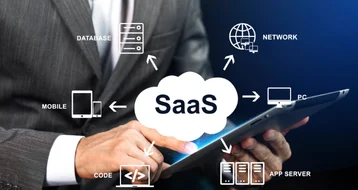
Illustration representing SaaS product structure and development
SaaS MVP product interface

SaaS MVPs

We develop initial SaaS product versions around the core users, workflows and functionality required for the first defined product scope. Additional modules can be planned as requirements develop.

Suitable for: founders, startups and product teams preparing an initial subscription software product.

Discuss a SaaS MVP
Multi-tenant SaaS platform interface

Multi-Tenant SaaS Platforms

We develop SaaS products that can support multiple customer organizations and their users within a tenant-aware application structure. The tenancy and data model is selected according to the product requirements.

Suitable for: SaaS products serving multiple customer organizations, teams or business accounts.

Plan a Multi-Tenant Platform
Subscription-based SaaS product with plans and billing

Subscription-Based SaaS Products

SaaS products can be structured around subscription plans, trials, account access, feature availability and supported billing services according to the commercial model of the product.

Suitable for: software products using recurring, tiered, trial or other subscription-based access models.

Discuss a Subscription Product
B2B SaaS platform with business account administration

B2B SaaS Platforms

We develop SaaS products for business customers that can include organization accounts, team members, roles, permissions, administration functions and product workflows.

Suitable for: software products sold to companies, professional teams and other business customers.

Discuss a B2B SaaS Product
API-connected SaaS product linked with external systems

API-Connected SaaS Products

Where supported technical access is available, SaaS products can connect with payment services, CRMs, communication tools, business platforms and other third-party systems through APIs.

Suitable for: SaaS products that need to exchange data or actions with existing external platforms.

Discuss SaaS Integrations
White-label SaaS platform with configurable branding

White-Label SaaS Platforms

White-label SaaS products can support partner or customer branding, product configuration and account structures where those capabilities are included in the required SaaS model.

Suitable for: software vendors, agencies and platform businesses that require configurable branding for different accounts.

Discuss a White-Label Platform
Vertical SaaS platform designed for a specific business sector

Vertical SaaS Platforms

We can develop SaaS products around the workflows, terminology, account structures and functionality required by a specific industry or defined business niche.

Suitable for: product companies building subscription software for a clearly defined market or operational sector.

Discuss a Vertical SaaS Product
SaaS analytics and reporting product dashboard

SaaS Analytics & Reporting Products

SaaS products can be designed around dashboards, metrics, reports, filters, exports and other structured data views according to the information users need to access.

Suitable for: reporting products, analytics platforms and SaaS applications where data visibility is a central part of the product.

Discuss an Analytics Product
SaaS Product Decision

When Custom SaaS Development Makes Sense

Custom SaaS development may suit a software product when multiple users or customer organizations need ongoing access to the same product environment, when subscription or account-based access is required, or when the application needs product-specific workflows, integrations and administration.

Business situations where custom SaaS development may be appropriate
Business Situation Why SaaS May Fit What Should Be Defined May Suit
Launching a Subscription Software Product The product needs recurring or account-based access rather than a one-time software delivery. Subscription plans, user access, feature availability, billing requirements and account lifecycle. New SaaS products
Serving Multiple Customer Organizations Different organizations need to use the same product while maintaining their own users, settings and data relationships. Tenant structure, organization accounts, user roles, permissions and tenant-specific product behavior. B2B SaaS
Building One Product for Many Customers The goal is to deliver a repeatable software product rather than develop a separate application for every customer. Shared product functionality, configurable settings, account structures and customer-specific requirements. Product companies
Managing Plans, Trials & Feature Access Different customers or plans need access to different product functionality based on the commercial model. Plans, trials, entitlements, billing events, feature rules and supported payment services. Subscription products
Providing Partner or Customer Branding Different accounts need selected branding, configuration or presentation options within the same product. Branding controls, account configuration, domains, permissions and supported customization boundaries. White-label SaaS
Connecting the Product With Other Systems The SaaS application needs to exchange information or actions with payment services, CRMs, communication tools or other platforms. Available APIs, authentication requirements, data flows, external dependencies and integration scope. Connected SaaS
Not every web application needs a SaaS model.

The decision should follow the product model. If software is intended for recurring use by multiple customers, organizations or subscribers, SaaS architecture may be appropriate. A single-company internal system or custom operational application may instead belong to a different software development model.

```
SaaS Functionality

What Your SaaS Platform Can Support

SaaS functionality should follow the product model, users, customer organizations and commercial requirements. Depending on the project, a SaaS platform can support tenant accounts, user roles, subscription plans, billing, feature access, onboarding, administration, integrations and reporting.

Accounts & Tenancy Who Uses the Product

Customer Organizations & Tenants

The product can support customer organizations or tenant accounts with their own users, settings and organization-level information where required.

User Accounts & Profiles

SaaS users can have individual accounts, profile information and account-level settings based on the product requirements.

Roles & Permissions

Different user types can be assigned access to selected product areas and actions according to the required role structure.

Plans & Product Access Commercial Model

Subscription Plans

Products can support different subscription plans or account levels according to the commercial structure of the SaaS product.

Trials & Account States

Where required, the product can include trial periods, subscription states or other account lifecycle rules.

Feature Access

Selected functions can be made available according to account type, plan, role or other product rules defined in the scope.

Product Operations Using & Managing SaaS

User & Tenant Onboarding

SaaS onboarding can guide users or organizations through account setup, required information and initial product configuration.

SaaS Administration

Administration tools can support user management, accounts, plans, product settings and other operational functions required by the platform team.

Notifications & Product Messages

The platform can trigger supported email, in-product or other notification flows based on account and product events.

Billing, Data & Integrations Connected SaaS

Subscription Billing Integration

Supported payment and billing services can be connected where subscription payments, invoices or billing events form part of the SaaS product.

APIs & Third-Party Integrations

Where technical access is available, the SaaS platform can exchange data or actions with supported external products and business systems.

Reporting & Usage Data

Dashboards, reports, filters, exports and product usage views can be included according to the information required by users or administrators.

SaaS features should follow the product model.

Not every SaaS platform requires every capability listed above. An MVP, B2B platform, white-label product or subscription application can require different combinations of users, tenants, plans, billing, administration, integrations and reporting. The final feature set should be defined according to the approved product scope.

```
SaaS Product Architecture

Planning the Foundation of a SaaS Product

Before SaaS development begins, the product structure should define how organizations, users, data, subscription rules, features, workflows and connected systems relate to one another. These decisions provide the technical foundation for the product implementation.

01 / FOUNDATION

Tenant & Organization Model

Define what represents a customer organization or tenant and how its users, settings and organization-level information relate to the SaaS product.

Tenant definition Organizations Account hierarchy
02 / ACCESS

Users, Roles & Permissions

Define the user types within the platform, how users join customer accounts and which areas or actions each role needs to access.

User types Invitations Permission rules
03 / DATA

Data Ownership & Relationships

Define which information belongs to a tenant, organization, individual user or shared product structure and how those data relationships are handled.

Tenant data User data Shared data
04 / COMMERCIAL MODEL

Plans, Billing & Feature Access

Define subscription plans, account states, billing requirements and the rules controlling which functionality is available to each account.

Plans Trials Feature access
05 / PRODUCT LOGIC

Product Workflows & States

Map onboarding, status changes, account lifecycle events, approvals and other product-specific actions before implementation begins.

Onboarding Workflow rules Product states
06 / CONNECTIONS

APIs & Integration Boundaries

Identify supported external platforms, available APIs, authentication requirements, data flows and other dependencies that the SaaS product needs to connect with.

API access Data exchange External systems
07 / OPERATIONS

Backend & Administration

Define the product logic and administration functions required for account management, notifications, reporting and other supported platform operations.

Admin tools Product logic Operations
08 / DELIVERY

Deployment & Environment Planning

Define the deployment environment, application configuration and release workflow according to the selected technology and operational requirements.

Environments Configuration Release workflow
Multi-tenant SaaS does not require one fixed architecture.

Tenant, application and data structures can differ between SaaS products. The architecture should be selected according to the customer model, user relationships, product requirements, integrations and technical environment rather than applying one structure to every project.

SaaS Delivery Process

Our SaaS Development Process

SaaS development should move from product definition to implementation through a clear sequence. We review the SaaS model, users, tenants, functionality, technical requirements and integrations before the application is prepared for release.

Product Definition

Product Goals & SaaS Model

We review the product purpose, target users, customer model, subscription approach, main functionality and other requirements that define the SaaS product.

Product goals SaaS model Requirements
Functional Planning

Users, Tenants & Functional Scope

We define the main user types, tenant or organization relationships, roles, required functions and the product scope that needs to be implemented.

Users Tenants Features
Product Experience

User Flows & UI/UX

We plan the screens, navigation, onboarding and application flows required for users to complete the main actions within the SaaS product.

User journeys Interfaces Onboarding
Technical Planning

SaaS Architecture & Technical Planning

The technical structure is planned around the tenant model, users, data relationships, backend requirements, product logic, integrations and deployment environment.

Architecture Data model Backend
Application Build

Frontend & Backend Development

We develop the product interfaces and backend functionality required for the approved users, workflows, accounts, data and administration functions.

Frontend Backend Product logic
Connected Systems

Billing, APIs & Integrations

Where included in scope and supported technical access is available, we connect the SaaS product with required billing services, APIs and third-party systems.

Billing APIs Integrations
Product Review

Testing & Product Review

We review the user flows, product functionality, tenant and account behavior, supported integrations and other requirements included in the agreed project scope.

User flows Functionality Integrations
Product Release

Deployment & Release

The SaaS application is prepared for the required deployment environment and release workflow according to the technology, configuration and delivery scope of the project.

Deployment Configuration Release
The process should match the SaaS product.

A SaaS MVP, multi-tenant B2B platform, white-label product or established subscription application can require different levels of product planning, design, technical architecture, integrations, testing and deployment. The final process should therefore follow the approved project scope.

SaaS Technology Stack

SaaS Technologies & Development Tools

The technology stack for a SaaS product should be selected according to the product model, application requirements, users, integrations, existing systems and deployment environment. Different SaaS projects can require different frontend, backend, database and cloud technologies.

SaaS Application Stack
A SaaS product normally combines several technical layers. The exact technologies should be selected after the product functionality, tenant model, data requirements, integrations and delivery environment are understood.
01/

Frontend Technologies Product Interface

React

Component-based interfaces for SaaS applications.

Next.js

React-based application development where selected.

TypeScript

Typed JavaScript development for supported projects.

JavaScript

Browser-based product functionality and interfaces.

02/

Backend Technologies Application Services

Node.js

Backend services and application APIs.

Laravel

PHP-based backend application development.

PHP

Server-side development where it fits the project.

Python / Django

Backend application services where required.

03/

Data & APIs Connected Product Layer

REST APIs

Application and third-party data exchange.

PostgreSQL

Relational data requirements where selected.

MySQL

Relational application and product data.

MongoDB

Document-based data requirements where appropriate.

04/

Cloud & Delivery Deployment Layer

AWS

Cloud services where selected for the project.

Google Cloud

Cloud infrastructure where required.

Azure

Microsoft cloud environments where selected.

CI/CD

Development and deployment workflows where included.

The technology stack should follow the SaaS product.

An SaaS MVP, multi-tenant application, B2B platform, white-label product or established SaaS application can require different combinations of frontend, backend, database, API and cloud technologies. The final stack should be selected after reviewing the functionality, integrations, existing systems and technical requirements of the project.

SaaS Project Scope

What Affects SaaS Development Cost & Timeline

SaaS development cost and timeline depend on the product scope rather than a single fixed estimate. Tenant structure, user roles, product features, subscriptions, backend requirements, integrations, data, testing and deployment can all change the amount of work involved in a SaaS project.

Product Structure

SaaS Model & Product Stage

An initial SaaS MVP and an established platform with existing users, workflows and technical dependencies can require different levels of planning and development.

SaaS MVP New platform Existing SaaS
Account Model

Tenants, Organizations & User Roles

The structure of customer organizations, users, roles, permissions and account relationships affects the product logic and the number of workflows that need to be implemented.

Tenants Roles Permissions
Functionality

Features & User Workflows

The number of product features matters, but so does the logic behind them. Multi-step workflows, approvals, account states, notifications and different user paths can increase the implementation scope.

Features Workflows Product states
Product Experience

UI/UX & Interface Requirements

The number of interfaces, user journeys, dashboards, onboarding steps and role-specific views can affect the design and frontend development effort required.

User journeys Dashboards Onboarding
Application Services

Backend, Data & Administration

Backend logic, data relationships, administration functions, background processes, reporting and other platform operations can significantly affect the scope beyond the visible product interface.

Backend Data model Administration
Commercial Logic

Subscriptions, Billing & Feature Access

Plans, trials, subscription states, billing events, account changes and feature-access rules can add product logic that needs to be planned and implemented.

Plans Billing Entitlements
External Systems

APIs & Third-Party Integrations

Integrations depend on the available APIs, authentication methods, required data flows and external platform behavior. Each connected service can introduce additional implementation and testing requirements.

APIs Payments External platforms
Delivery Scope

Testing, Deployment & Release Requirements

The required review scope, supported workflows, environments, deployment configuration and release activities should be included when estimating the complete SaaS project.

Product review Environments Deployment
SaaS estimates should follow defined requirements.

Unisam Technologies can review the SaaS model, users, tenant structure, features, backend requirements, subscriptions and integrations before defining the development scope and preparing a project estimate. Final cost and timeline depend on the requirements agreed for the individual SaaS product.

Existing SaaS Development

Updating, Extending & Modernizing Existing SaaS Platforms

SaaS development does not always begin with a new product. Existing platforms may need additional features, subscription changes, tenant updates, new integrations, interface changes or technical modernization as product requirements evolve.

New Features & SaaS Modules

Existing SaaS products can be extended with approved functionality, new workflows, user-facing modules, administration tools and other product capabilities.

SaaS feature development

Tenant & Account Model Changes

SaaS products may need changes to organization accounts, tenant relationships, user roles, permissions or account-level settings as the product model develops.

Multi-tenant SaaS updates

Subscription & Billing Updates

Existing subscription products may require new plans, trials, billing flows, account states or feature-access rules according to changes in the commercial model.

Billing & subscription changes

New APIs & Integrations

Where supported technical access is available, existing SaaS products can be connected with additional payment services, communication tools, business systems and other external platforms.

SaaS API integration

UI/UX & User Flow Updates

Existing product screens, onboarding flows, dashboards and navigation can be reviewed and updated when the approved SaaS requirements change.

SaaS interface updates

SaaS Modernization & Migration

Selected application components, dependencies, backend services, interfaces or deployment workflows can be reviewed for modernization or migration where the existing product requires broader technical changes.

SaaS modernization

Backend & Data Changes

Product logic, administration functions, data relationships and supported backend workflows can be updated when new SaaS requirements affect the existing application structure.

SaaS backend development

Continued SaaS Development

Where ongoing development is part of the engagement, approved product changes, new functionality, integrations and technical updates can be handled after the initial release.

Continued development
Modernization does not always mean rebuilding the complete SaaS product.

The appropriate approach depends on the current codebase, SaaS architecture, dependencies, requested functionality, integrations and deployment requirements. Some platforms can be extended directly, while others may require selected modernization, migration or broader redevelopment.

Why Work With Unisam for SaaS Development

Unisam Technologies approaches SaaS development around the product model rather than treating it as only a collection of screens. We consider users, tenants, subscriptions, workflows, integrations, and technical requirements when planning and developing the approved SaaS scope.
SaaS development workspace with programming code displayed on laptop screen

SaaS-Specific Product Planning

We review the customer model, users, account structure, subscriptions, product functionality, and technical requirements before implementation decisions are finalized.

Frontend & Backend SaaS Development

The approved SaaS scope can include product interfaces, backend functionality, user and account logic, administration tools, and other application services required by the product.

Existing SaaS Review & Modernization

When work begins with an existing SaaS product, the current codebase, product structure, integrations, and requested changes can be reviewed before deciding whether to extend, modernize, or redevelop selected areas.

Tenant, User & Subscription Planning

Multi-tenant and subscription products can require defined relationships between organizations, users, roles, plans, account states, and feature access. These requirements are considered as part of the product structure.

Billing, APIs & Integration Planning

Where included in the project and supported technical access is available, SaaS applications can be connected with billing services, APIs, and other third-party systems required by the product.

Development Beyond the Initial Release

Where continued development is included in the engagement, additional features, integrations, product changes, and technical updates can be handled after the initial release.

Web Development Services FAQs

SaaS development services cover the planning, design, development, integration, testing, and release of software products delivered through a subscription or account-based model. The scope can include user accounts, tenant structures, billing, dashboards, APIs, administration tools, and other product-specific functionality.

SaaS Development

Ready to Plan Your SaaS Product?

Tell us about your SaaS product, users, tenant model, subscription requirements, integrations or existing platform. Unisam Technologies can review the requirements and help define the development scope for a new or existing SaaS application.

Scroll to Top