

Many businesses start with ready-made software because it is fast, simple, and easy to access. But as the business grows, standard tools often become limited. Teams may start using spreadsheets, disconnected apps, manual reporting, and repeated workarounds just to manage daily operations.
This is where custom software development becomes useful. Custom software development helps businesses build digital systems around their actual workflows, users, data, and long-term goals.
What Is Custom Software Development?
Custom software development is the process of planning, designing, building, testing, deploying, and maintaining software for the specific needs of one business, team, or user group.
Unlike off-the-shelf software, which is built for a broad market, custom software is tailored to unique business processes, internal workflows, customer needs, integrations, and growth plans.
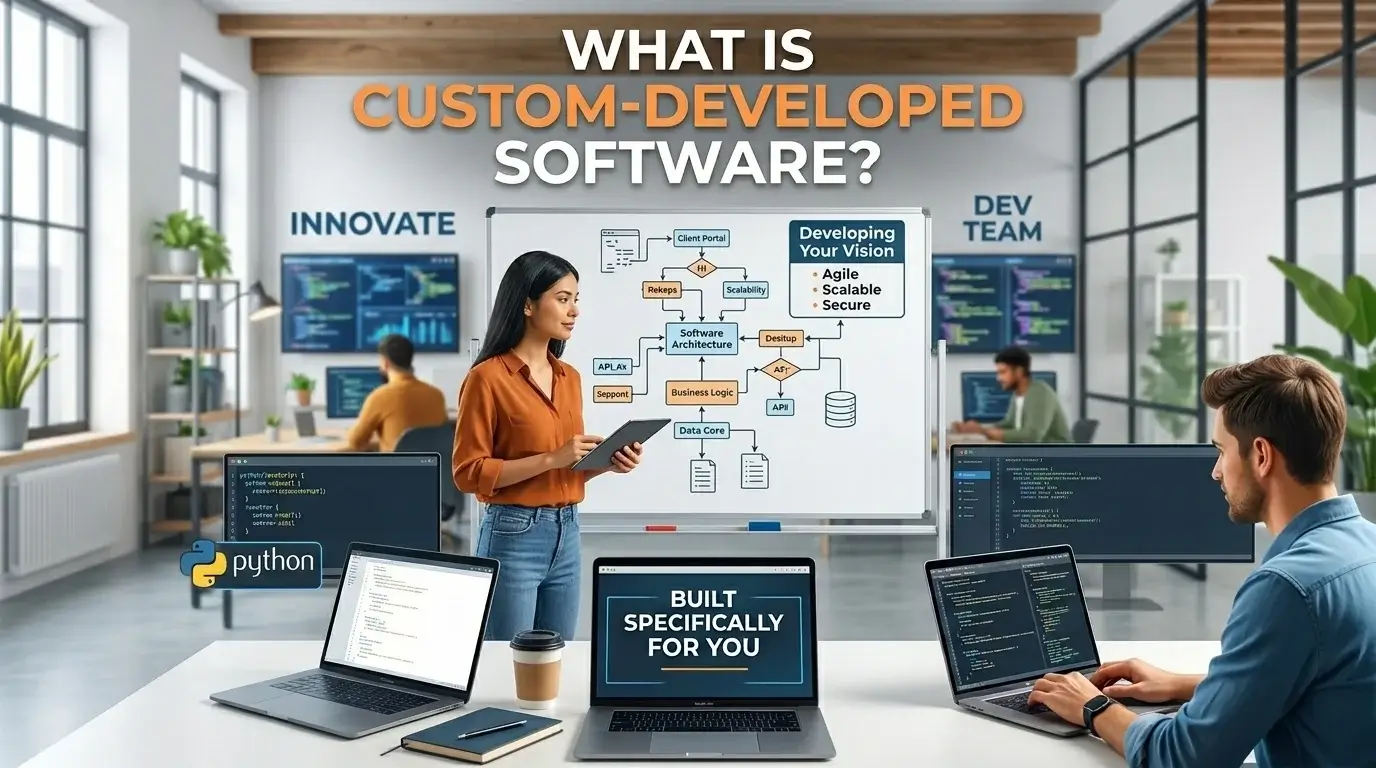
What Is Custom-Developed Software?
Custom-developed software is the final product created through the custom software development process. It can be a web application, mobile app, internal dashboard, CRM, ERP module, customer portal, SaaS platform, workflow automation tool, or AI-powered business system.
Examples of custom-developed software include:
- A logistics dashboard for tracking shipments.
- A healthcare appointment and patient portal.
- A real estate lead management system.
- A custom CRM for sales teams.
- An e-commerce order management platform.
- A finance reporting dashboard.
- A SaaS product for subscription-based users.
- An internal workflow automation system.
Why Custom Software Development Is Important
Custom software development is important because many businesses cannot fully operate with standard tools forever. As operations become more specific, companies need systems that support their own workflow, data structure, user roles, and reporting needs.
Need Software That Fits Your Business Process?
Unisam helps businesses plan, design, and develop custom software that supports real workflows, improves operations, and connects with existing systems.
Explore Custom Software Development ServicesCustom Software vs Off-the-Shelf Software
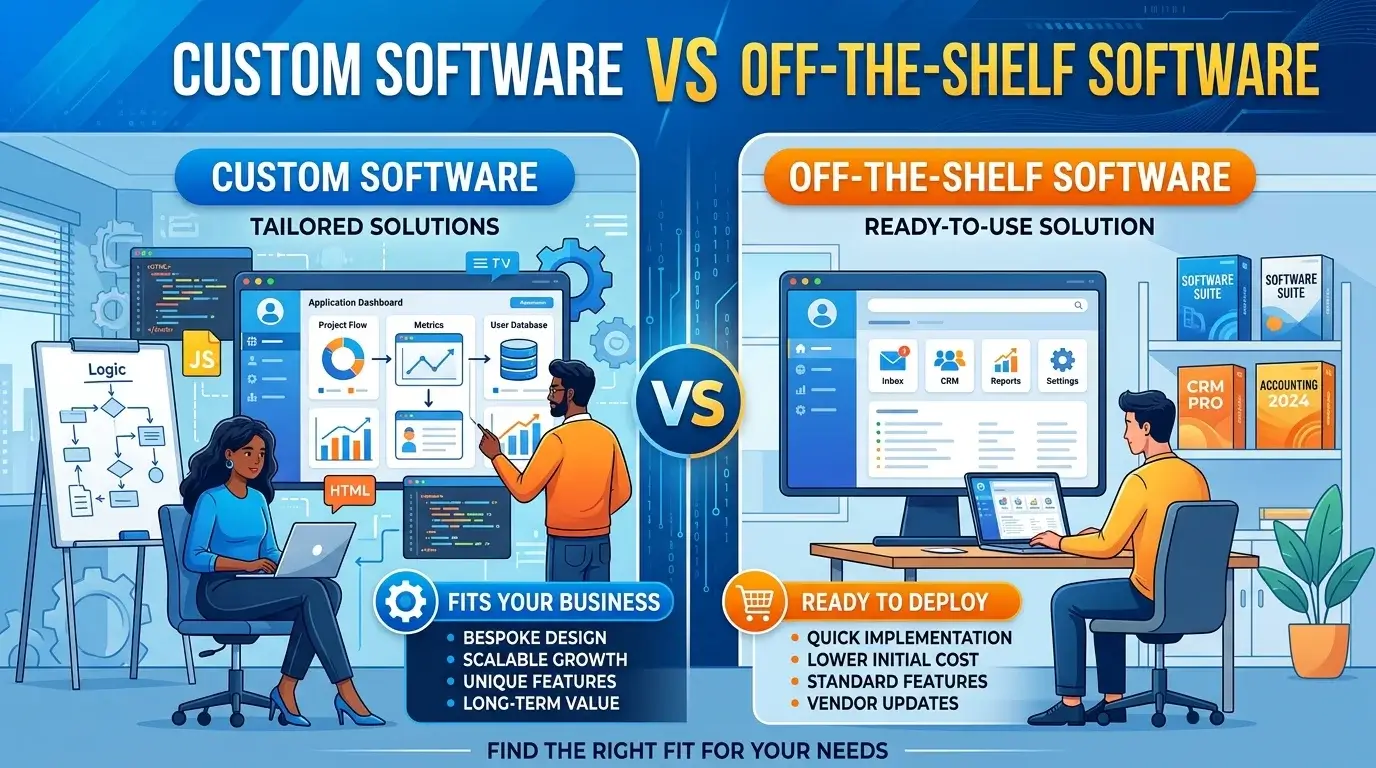
Off-the-shelf software is a ready-made product built for a broad audience. Custom software is built for a specific business need. Both options can be useful, but they serve different situations.
| Factor | Custom Software | Off-the-Shelf Software |
|---|---|---|
| Business fit | Built around your workflow | Built for general users |
| Starting cost | Usually higher | Usually lower |
| Flexibility | High | Limited |
| Integrations | Can be built around your systems | Depends on available options |
| Scalability | Can grow with your business | May become limited |
Custom Software Development Process
The custom software development process usually follows clear stages. Different companies may use slightly different methods, but most strong development processes include discovery, design, architecture, development, testing, deployment, integration, maintenance, and scaling.
1. Discovery and Requirement Analysis
The first step is to understand the business problem. This includes studying the current workflow, users, existing tools, data sources, pain points, and business goals.
2. Custom Software Development Strategy
A custom software development strategy defines how the solution should be planned and delivered. This includes project scope, required features, user roles, MVP planning, technology stack, integration needs, security requirements, timeline, and maintenance plan.
3. UI/UX Design
The design stage creates the user experience and visual structure of the software. This may include wireframes, clickable prototypes, dashboard layouts, form flows, and customer journey planning.
4. Architecture and Technology Planning
Before development starts, the technical structure must be planned. This includes backend architecture, frontend framework, database design, cloud infrastructure, API structure, and security approach.
5. Development, Testing, and Deployment
Developers build the actual software in modules, test it for performance, security, responsiveness, APIs, and user acceptance, and then deploy it to the live environment.
Custom Software Development for Integration
Many businesses already use several tools, but those tools do not always work together. Custom software development for integration helps connect these systems into a more organised workflow.
- CRM systems
- ERP platforms
- Accounting tools
- Payment gateways
- Inventory systems
- APIs and databases
- AI tools and reporting dashboards
Connect Your Business Tools with Custom Software
If your CRM, ERP, dashboards, databases, or internal tools do not work together, Unisam can help you plan and build a custom integration solution.
Discuss Your Integration NeedsBenefits of Custom Software Development
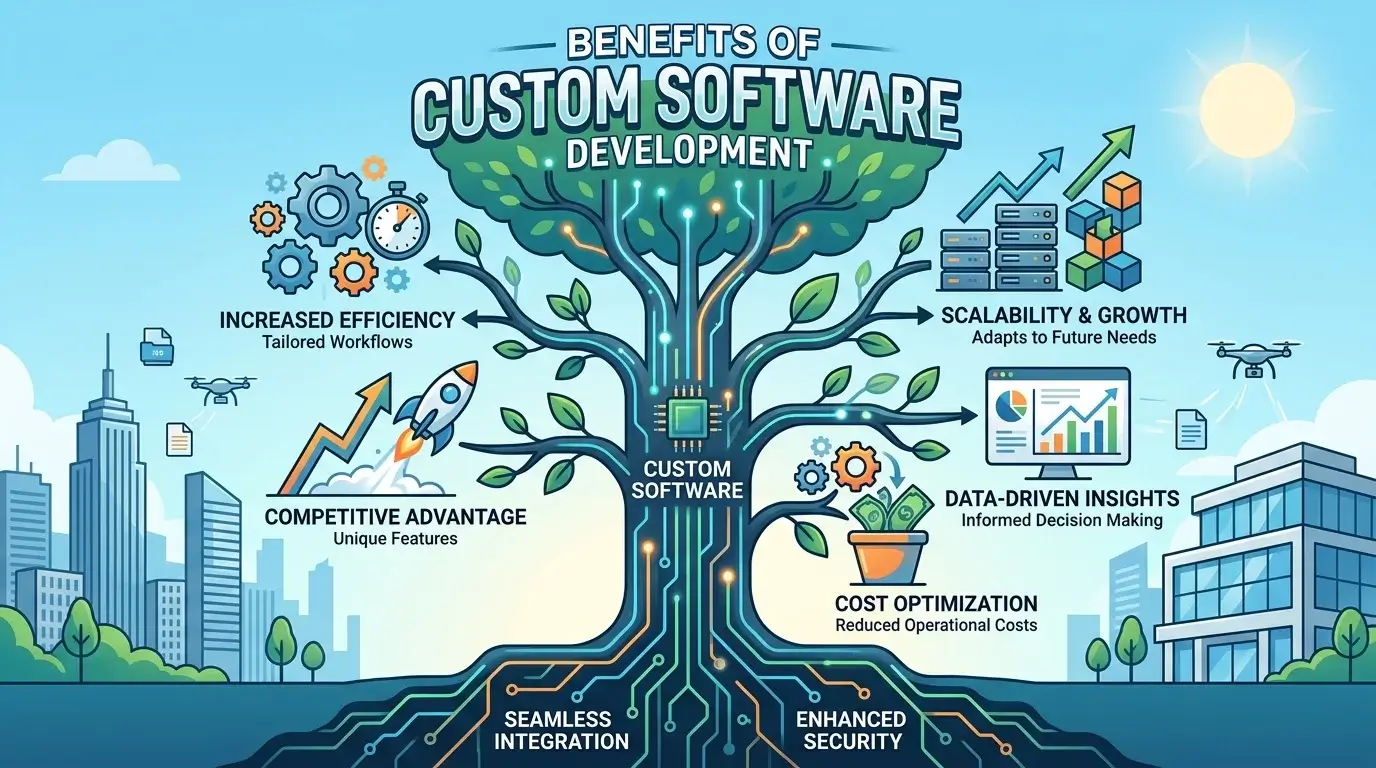
Custom software development gives businesses more control over how their digital systems work. The benefits are strongest when the software is planned around real business needs.
- Better workflow fit
- More automation
- Stronger integration
- Better data visibility
- Higher scalability
- Better security control
- Competitive advantage
Challenges of Custom Software Development
Custom software has many benefits, but it also needs realistic planning. Common challenges include higher upfront investment, longer planning time, clear requirements, regular communication, ongoing maintenance, and choosing the right development partner.
What Is Custom Software Consulting?
Custom software consulting helps businesses decide what to build, how to build it, and whether custom software is the right option.
When Should You Choose Custom Software Development?
You should consider custom software development when standard tools are no longer enough for your business, your team depends on spreadsheets, your tools are disconnected, or your workflow needs custom reports, portals, automation, or integrations.
Custom Software Development Examples
Custom software can support many industries and business models including healthcare, logistics, real estate, ecommerce, finance, and education.
Ready to Build Custom Software for Your Business?
Start Your Custom Software Development Project
From planning and design to development, integration, and long-term support, Unisam helps you build software that is practical, scalable, and aligned with your business goals.
Start Your ProjectFAQs About Custom Software Development
What is custom software development?
Custom software development is the process of creating software for the specific needs of a business, team, or user group.
What is custom-developed software?
Custom-developed software is a software product built for a specific business purpose, such as a CRM, dashboard, portal, SaaS platform, or mobile application.
What is the custom software development process?
The process usually includes discovery, strategy, UI/UX design, architecture planning, development, testing, deployment, and maintenance.
Is custom software better than off-the-shelf software?
It depends on your business needs. Off-the-shelf software is better for simple needs, while custom software is better for specific workflows and integrations.
